







































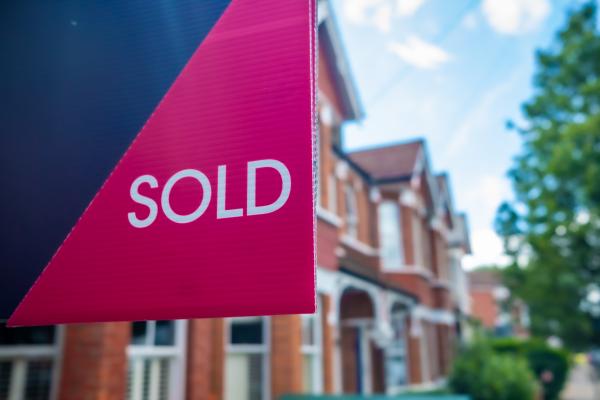
Tax when you sell a property
In a recent social media poll, we asked whether you ever have to pay tax if you sell your house. 17% said you never have to pay tax, whilst 83% thought there could be tax to pay. As is often the way in the world of tax, the real answer is “it depends”….
Simple cases
In the simplest scenario, which thankfully applies to a lot of home owners, if your property is worth more by the time you sell it than it was when you bought it, and:
- it’s your only home,
- you’ve lived there for the whole period you’ve owned it,
- you bought it as a place to live, not purely as an investment, and
- you’ve only used the property as a place to live (it hasn’t been rented out, and none of it has been used exclusively as business premises)
then you’re unlikely to have to pay tax when you sell.
This is thanks to ‘Private Residence Relief’, which applies automatically in simple cases like this example. This relief reduces the potential Capital Gains Tax (CGT) charge that would otherwise apply to zero, and you shouldn’t need to tell HMRC about the sale.
Any exceptions?
Building on that simple scenario, things get more complicated if you’ve had significant periods away from the home during the period you’ve owned it – for instance if you owned a house for 10 years but moved in with a partner half way through that time, leaving your house empty other than for occasional visits.
Private Residence Relief can still apply during some absences, but in most cases the total time you can spend away from the home and still qualify for tax relief is limited, and you generally have to have lived in the property before and after that period to get tax relief for the period of absence.
Another factor which could mean there’s tax to pay when selling your house is if the property has a lot of land. Most houses won’t fall foul of this, but if you own a property where the total plot (including the land the house sits on) is more than 0.5 hectares (approximately 1.2 acres), then the capital gain when you sell won’t be automatically exempt from tax. Instead, you’ll need to consider whether there’s a good reason why the standard 0.5 hectare exemption should justifiably be more in the case of your house.
For example it might be reasonable to argue that a grand manor house would be expected to come with a bigger than average area of land around it, but that same argument would be difficult to make for a small two-bedroom bungalow. If there isn’t a good reason to exceed the 0.5 hectare standard rule, or if HMRC don’t agree with your argument, then there will be some CGT to pay on the sale. Any disposal of a house with land over 0.5 hectares has to be reported to HMRC.
What if you own more than one property?
Private Residence Relief is generally only available for one property at a time. If you own more than one property, and split your time between them, it’s possible to tell HMRC which one you want to be treated as your ‘main residence’. Your chosen main residence will qualify for tax relief, but your other property (or properties) won’t.
If you don’t tell HMRC which property you want to be treated as your main residence, then which property qualifies for Private Residence Relief will be based on your ties to each. This normally includes factors such as where you spend most time, and where you’re registered for the electoral roll, doctors, banking, car registration etc. Married couples and Civil Partners can only have one main residence between them.
If you own a rental property as well as your own home, the rental property can’t qualify for Private Residence Relief while there are tenants there, as it isn’t available for you to live in.
Where to find help
If you’re selling your home and want to know whether you’ll have tax to pay, HMRC offer an interactive tool to work out the available tax relief when you sell your home. For complex circumstances or unusual properties, finding a qualified tax adviser to discuss the tax position in advance of any potential sale will help you understand the tax implications.
How to report and pay CGT
If there is CGT to pay when you sell your house, you’ll normally need to report the sale and pay the CGT due to HMRC within 60 days of completion. Our user's guide to the CGT on UK Property Reporting Service contains guidance on how to do this, as well as useful links to more information.
If you’re in Self-Assessment, you’ll need to report the sale on your tax return too. The Low Income Tax Reform Group’s Capital gains tax reporting guidance explains the interaction between Self-Assessment and the CGT on UK Property Reporting Service.
To explore all the resources, daily content, and ways to get involved during Tax Awareness Week 2026, visit the Tax Awareness Week webpage - and watch out for new content being added every day throughout the week!
This article reflects the position at the date of publication shown above. If you are reading this at a later date you are advised to check that that position has not changed in the time since.